Saturday, February 7, 2015

Coping with Conflicts


A recent disagreement that I had at my work with my co-worker was about a child’s absence situation. Let’s name the child John. John has been missing school for a week and we were not about to contact the mother. Mother is taking care of 5 children and separated with the father. We finally got in touch with the Dad, he said Mom is working on the housing situation and has been leaving the children with him. He didn’t know where she is either. My co-worker suggested to call the Child Protective Services (CPS) for help as Mom is disappeared. But I strongly degree because I know this is a homeless family and they are on the right track to finding a stable home for the children and that Dad is a responsible person who I think is trustable to take care of his child. I am not sure if I am right but at this moment I do not want to call CPS to break the relationship between us and the family even though I know the purpose of CPS is to protect children, yet I don’t think this would be helpful.


            I use the 3Rs to solve this conflict by respecting her point of view by listening to her and validating the importance of ensure the child’s safety. Then I tell her that I wanted to express my point of view then we can decide what is good for the situation. My co-worker also did the reciprocal respectfulness to me when I am telling her about my concern about reporting. We both being responsive to each other. At the end, we decided to continue to call mother and call people down the emergency list to help us find mom . We also explain to them that we are worry about them and want to help them to save the slot at our school as the policies said any child miss school for a week and no respond will be terminated. Finally Mom called in in 3 days said they are still finding a house and now living in a homeless shelter. She would like her child to continue to our school but the commute from the shelter and our school is far. We then offered to help her finding school around the shelter. 
 
           
My co-worker and I were so delight to see Mom is working hard to support her family and that we are able to support them in the process. Using 3Rs is useful to solve conflict or disagreement, yet disagreement requires both mutual respect and open-mindedness to list to the different perspectives. To me, you don’t need to agree with the other point of view, yet we need to listen to the difference and try to find a common ground. In this case, both of our goal is to support the child and family’s well-being, but we have different perspectives.  

Saturday, January 24, 2015

Different Communication


I am so fortunate to work with a mixed culture of colleagues, which help me learn and understand different aspect of diverse cultures every day. We have a range of 20-60 years old staffs from Chinese, African American, and Hispanic. I found that some staff have similar communication style and some with different communication style depends, yet not necessary because of their age or cultures.


For example, Mrs. C, Chinese woman around 50 years old seems to have a dominant communication style where she tends to control the conversation (Vuckovic, 2008). When I ask her what did she do last weekend, she seems not like to share much about what she did. She answered, “Nothing much, we just have a family gathering”, and did not ask back.
On the other hand, Mrs. M from Mexico who is also around 50 years old, has a different communication style. She has a more open communication style. When I asked the same question, she told me about almost everything she did on Sunday and detailed. Then she also asked me back. I answered her that I am tired as I was working on my paper the whole weekend, she then valued my feeling and shared that how she went to school, take care of her children and work the same time when she was young. I felt better after talking to her and motivated by her success and stories.
I considered myself has a similar communication style as Mrs. M. that I love to talk to people, open to any topics and love to share my experience. Yet I understand that Mrs. C may not have a strong or trust relationship with me so she doesn’t want to share her weekend. Or it could be her communication style that she is more conservative.
This helped me to understand that every one has different communication skills and each person’s communication style could be varied depends on their personalities, age, experience, beliefs, education level, values, and etc. We should never generalize or stereotype of any culture or races into specific categories.I believe that effective communication needs both side be attentive to build a content conversation. Three strategies that I would use to help me communicate more effectively with the people who are more conservative are: 

            1.       Validate their comment or answer, then ask more clarify questions. However, we need to be mindful not to ask too personal questions in the beginning of the conservation, as it may make the speaker feel pressured. We also need to be aware of their non-verbal gesture, such as facial expression or body movement. If they seem to ignore you or not responding, we should stop asking more question to make the person uncomfortable. 

          2.       Validate their comment or answer by sharing similar experience that we had in the past. This could help break the ice and open up the conversation. 
 
3.    Find the right moment and topic to talk. If you are having a difficult time to communicate with a person, maybe spend some time to observe what the person like to do or have that shared the same common with you. Use this commonalities/ similarities as the topic to open up the conversation. For example, if you have a dog and the speaker also has a dog, you could talk about your dog and dog parks that you bring your dog too, etc. And maybe ask him/ her for suggestions could also make them feel valued.  


Saturday, January 17, 2015

Observe A Communcation Style through Non-verbal Expression


For this assignment, we need to watch a show mute and observed the non-verbal communication then compare it with the sound turned on. I picked  “Parenthood” and watched 10 minutes of it. The scene started in a car, a man was driving and a woman was talking to him. They both look serious during the conversation, the woman looks like she is about to cry. She pointed to the right side then the scene changes to a restaurant with another pair of man and women sitting around the table, looks like ordering. Then the woman who was in the car went out from the restaurant and one of the man came out to talk to her. Here’s what I see and think when the show was turned to mute:
·         The couples in the car are in a relationship
·         They were arguing about something on the way to meet up another couple
·         The woman is very upset with her boyfriend/ husband
·         The man who went out to talk to her is her friend
·         The man was listening to her while holding her hands and gave his input that made her feel better
             Here’s what is the real story about: The woman was telling her husband that she felt ashamed when he called up the lawyer to talk about her confusion with her step-son (the man’s son). The man explained why but the woman is upset. When they get to the restaurant, their friend couple was talking about how their child could have a class with their son together, which triggered the woman again that’s why she left the restaurant. The man who came out to ask her what happened and then sharing his experience with his stepdaughter and his experience with his mom which made the woman felt better.

                This is a great activity to learn how important non-verbal communication is also a essential skill of effective communication. With the volume in mute, I do not know what relationship each character are, but from the distance they have with others, I can distinguish if they just met, close friends, or couples. Moreover, if culturally acceptable, it is important to look at someone into their eyes to show them that you are paying 100% attention to what they are saying. A hug is also a way to express empathy or caring, again, if that is acceptable. Like in Asian, they do not normally hug friends or family in the older generation, hugging is a more intimate action that only couples will do. Moreover, through the video, it reminded me that when listening to others, we should respect other by staying with them and avoid not much body movement, ex: standing up, checking your phone shows you are not interested in the conservation. An effective communication requires mutual reaction. Both sides need to pay attention while other is talking, validate and acknowledge others feeling and opinions, and share your experience or suggestion if acceptable. Also if the situation allows, ask questions to clarify the questions would help effective communication too, as sometimes the words that we say may have totally different meanings to others.  

Friday, January 9, 2015

Competent Communicator


A competent communicator that I would like to present in this blog is the Program Director of my program Cheryl Horney. Although she is a director, she listens to staff’s concerns and will follow up on the concern or feedback. Mr. Horney is very passionate on the work she does. She cares about her program staff, children and families a lot. Our program serve a very diverse population and she will ensure we have proper resources to translate the program materials or meeting in the families’ home languages. She even provide translation materials and interpreter in the staff training for staff who are English Learners, so that they have a full understanding on the materials. 
 
 Ms. Horney also treats all employee the same way whether he/she is a janitor, center assistant, or manager. She is also sensitive to the need of the diverse population. She would spend time to explain the content to the audience in the language that they understand. Although she has a very busy schedule, she would take time to present herself in the program to listen and support parents or staff. Everyone trusted her decisions, respect and follow her leadership with no concern or complain. 
 
I would love to learn the way she supports everyone in a respect way that does not conflict with her professional role. Competent communicator would like how to adjust their language suitable to the audience in a respectful, which is what I am trying to learn.  

Saturday, December 20, 2014

Professional Hopes and Goals

I hope early childhood educators could:


                  When working with children and families who come from diverse backgrounds, we should always have a open-minded and respectful mind to "discover" other cultures. The more people practice equity in school, the better chance to advocate for equity and social justice world in a long run!


Goal:


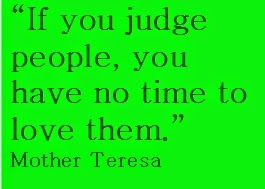
If everyone who work in the early childhood field could put them their judgment glasses, I believe they will see tons of positive and wonderful side of children and families. Passion is related to love, if we have bias inside us, it is hard to love/ support the child and provide them an equity environment. It is important to be aware of our mindset. We do not have to love all children, yet we should NEVER judge them despite their social identities.


I would like to thank you all my colleagues for sharing their stories and suggestions ! All your experiences and suggestions are very valuable to my professional growth. I really enjoy reading all the strategies or methods that you have been working with children and families from diverse background. I believe with all dedicated group here, we will expand our dedication and passionate to advocate equity, social justice and diversity in our work and expand to the society.

Good Luck Everyone in your journey of promoting equity and social justice! It is not easy and would not be a quick fix. But with everyone's effort, I believe even little effort would make a social change to someone. 

Happy Holidays!